
When engineering an off-grid battery pack in Pakistan, the individual prismatic cells are the foundation of your entire investment. Unfortunately, the local market is heavily saturated with recycled, degraded, or falsely advertised cells pulled out of crushed electric buses in China and resold as “New”.
To successfully build a LiFePO4 (Lithium Iron Phosphate) battery pack capable of enduring violent summer loadshedding while running 1.5-ton AC units, you must understand how to mathematically identify Genuine Grade A cells and interpret their hard specifications.
This technical syllabus decodes the physical and electrical parameters of modern high-capacity prismatic cells.
1. The Prismatic Cell Specification Matrix
Modern LiFePO4 cells come in various form factors. The exact dimensions, weight, and Internal Resistance (IR) are your primary metrics for verifying authenticity before you purchase.
| Capacity Metric | Dimensions (L x W x H) | Standard Weight | Optimal IR (mΩ) | Nominal Voltage | Cycle Life Rating |
|---|---|---|---|---|---|
| 100Ah | 130 x 36 x 200 mm | ~2.0 kg | < 0.4 mΩ | 3.2V | 3,000 Cycles |
| 200Ah | 173 x 54 x 207 mm | ~4.0 kg | < 0.3 mΩ | 3.2V | 4,000 Cycles |
| 280Ah | 174 x 72 x 205 mm | ~5.3 kg | < 0.25 mΩ | 3.2V | 6,000 Cycles |
| 314Ah (Target Spec) | 174 x 72 x 207 mm | ~5.5 kg | < 0.18 mΩ | 3.2V | 8,000 Cycles |
2. Grading Classifications: Grade A vs B vs C
Automotive battery factories (like EVE, CATL, REPT) stringently test every cell before it ships. Here is how they are graded relative to their retention graphs:
Quality Testing Lifecycle
Perfect Spec | Internal Resistance Under 0.2mΩ
Slight Defect | Internal Resistance Under 0.3mΩ
Dead/Used | Internal Resistance Over 0.4mΩ
- Grade A Cells: Perfect internal resistance, matched voltages, zero swelling, original intact QR codes denoting batch dates. Rated for full 6,000-8,000 cycles.
- Grade B Cells: Didn’t pass strict EV requirements due to slight cosmetic defects or a 1% capacity variance. Excellent for home solar if matched properly and priced correctly.
- Grade C (Recycled): Pulled from dead electric buses, bloated, scratched QR codes, high internal resistance. Will likely fail or catch fire if pushed heavily in a Pakistani summer.
3. C-Rate Performance Metrics
The “C-Rate” defines how violently fast you can discharge a battery without damaging it. A 1C rating means you can fully drain the battery in 1 hour. A 0.5C rating means you can drain it safely over 2 hours.
Voltage Droop vs Discharge Intensity
How heavily you load the battery impacts its stable voltage instantly.
3.35V
3.25V
3.15V
2.95V (High Stress)
For DIY Solar Packs in Pakistan, a 0.5C Continuous Discharge is the golden rule. For a 314Ah pack, this means you can consistently pull 157 Amps (roughly 8000 Watts at 51.2V) safely all day without overheating the terminals.
4. Mandatory Quality Testing Protocol
When building your pack, do not assume your cells are matched. You must manually sequence them.
- Visual Inspection: Use a straight-edge ruler against the flat side of the cell. If there is a curve or swelling, the internal casing has degassed. Reject the cell.
- Internal Resistance (IR) Check: Use a YR1035+ purely dedicated IR meter. Multimeters are completely inaccurate for this. Ensure all cells measure within a 0.05mΩ variance of each other.
- QR Code Decoding: Scan the QR code. The 9th and 10th digits typically reveal the exact production year. If the cell is over 18 months old and sitting at 2.5V, it may be dead.
Secure Your Top-Tier Grade A Setup
If you don’t want to play the lottery with local vendors, get your precisely-matched pristine cells directly from our verified inventory:
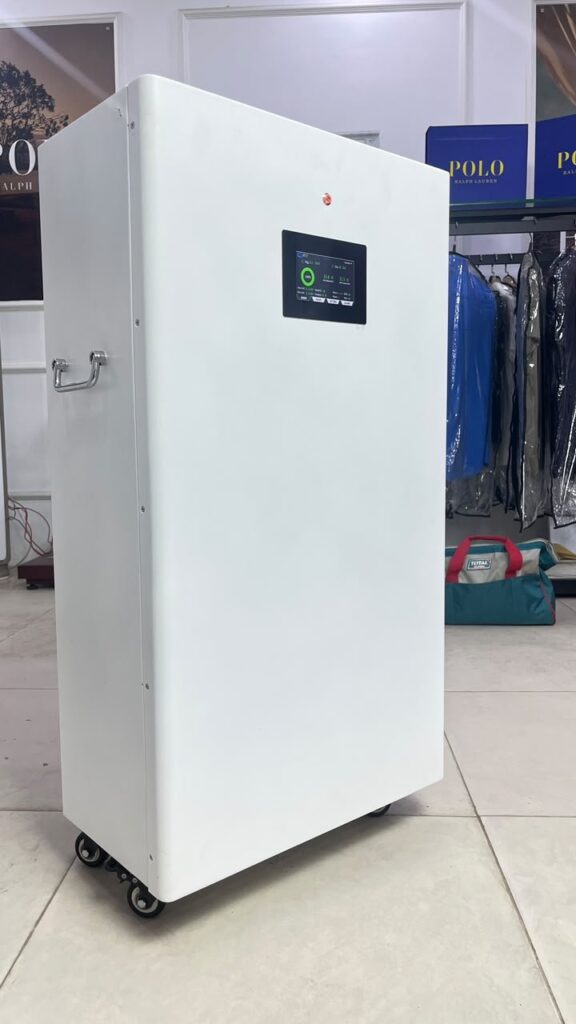
16KWh 51.2V 314Ah Lithium Battery
Heavy-duty capability optimized explicitly for rigorous loadshedding resistance.
Frequently Asked Technical Questions (FAQ)
Q: What is the exact operating temperature range for LiFePO4 cells?
A: They safely discharge between -20°C to 60°C. However, you must NEVER charge a LiFePO4 battery below 0°C (Freezing), or lithium plating will instantly destroy the cell chemistry. A good BMS is mandatory here.
Q: Why does the voltage sit at 3.3V forever, but suddenly drop to 2.8V very quickly?
A: LiFePO4 has an incredibly flat discharge curve. It will output near exactly 3.2V for 80% of its capacity. Once it nears the 10% SOC margin, voltage plummets instantly. You must rely on a smart Coulomb-counting BMS for accurate % reading, not raw voltage.
Q: Is compression (clamping the cells) strictly necessary?
A: Yes! As cells charge, they physically swell slightly. Applying 300kgf of structural compression using fiberglass tape or threaded rods prevents micro-delamination inside the cell, adding thousands of cycles to its ultimate lifespan.
Conclusion
Understanding lithium chemistry translates directly into maximizing your Return on Investment. Buy weighing your cells, demanding QR codes, checking Internal Resistance, and strictly limiting continuous discharge parameters, you can build a domestic grid that will comfortably outlast your solar panels.
Need expert assistance matching cells to your specific inverter configuration? Call OffGridStore’s technical support line at 03249094945 to secure an authentic, Grade-A power wall.