
When engineering an off-grid solar or battery backup system in Pakistan, deciding between a 12V, 24V, or 51.2V (48V) architecture is the most consequential decision you will make. This choice dictates the thickness of your copper cables, the efficiency of your inverter, and ultimately, the total lifetime cost of your system.
A staggering percentage of domestic failures in the Pakistani market stem from homeowners attempting to push 5000 Watts through a 12V system, resulting in melted cables and dangerous thermal events. As a general engineering rule of thumb: As you double the voltage, you halve the amperage. And in solar engineering, heat and resistance are determined by amperage, not voltage.
This technical guide will break down the mathematical exactness of each system voltage, providing you with a rigorous framework for sizing your LiFePO4 configuration accurately.
1. The System Architecture: 12V vs 24V vs 51.2V
Because a single LiFePO4 cell has a nominal voltage of 3.2V, we combine them in a “Series” configuration to achieve our desired system voltage.
Cell Series Architecture
- 12V System (4S): The traditional standard. Requires exactly 4 cells. Nominal voltage is 12.8V (3.2V × 4), with a maximum charge voltage of 14.6V.
- 24V System (8S): Requires 8 cells. Nominal voltage is 25.6V.
- 51.2V System (16S): The modern standard for whole-home setups. Requires 16 cells. Nominal voltage is 51.2V (commonly marketed as 48V).
2. The Amperage Bottleneck & Cable Mathematics
The core reason we increase system voltage is to reduce Amperage. To deliver 5,000 Watts (5kW) of power (enough for a standard Pakistani household running a 1.5-ton AC and fridge), look at the mathematical difference based on Ohm’s and Watt’s Laws (Amps = Watts / Voltage):
| System Voltage | Watts Needed | Required Amperage | Required Copper Cable (AWG) | Inverter Heat Loss |
|---|---|---|---|---|
| 12V | 5000 Watts | 416 Amps | Extremely Thick (4/0 AWG x 2) | Massive (85% Efficiency) |
| 24V | 5000 Watts | 208 Amps | Thick (4/0 AWG) | Moderate (90% Efficiency) |
| 51.2V | 5000 Watts | 97 Amps | Standard (2 AWG) | Minimal (96% Efficiency) |
3. Cost-Benefit Analysis (PKR Framework)
While the goal is to target 51.2V for whole-home usage, initial budgets vary wildly. Here is the estimated structural setup cost comparison assuming a 5kWh target capacity.
| Component Matrix | 12V (4S) Setup | 24V (8S) Setup | 51.2V (16S) Setup |
|---|---|---|---|
| Cell Cost (for 5kWh) | Requires massive 400Ah cells | Requires 200Ah cells | Requires affordable 100Ah cells |
| BMS Cost | Lowest (4S BMS) | Moderate (8S BMS) | Highest (16S BMS) |
| Hybrid Inverter Cost | Limited mostly to 1kW-2kW | Limited mostly to 3kW | Huge ecosystem (5kW, 8kW, 12kW) |
| Long-term Scalability | Poor | Moderate | Excellent (Parallel Arrays) |
The Verdict: A 12V system is slightly cheaper upfront because a 4S Smart BMS costs less than a 16S Smart BMS. However, you are strictly limited to tiny inverters. If you ever plan to power a home in Pakistan, starting at 51.2V (16S) is physically and economically mandatory.
4. Application Matrix: Matching Load to Voltage
Different tasks require different voltages. Here is the final decision matrix based heavily on Pakistani usage habits.
Thermal Efficiency % vs Voltage (5kW Load)
- 12V Targets: Telecom backup, tiny remote off-grid cabins, DC water pumps, or direct DC caravan setups. Usually maxed out at 1,500W inverters.
- 24V Targets: Older 3kW Voltronic inverters. Excellent for homes running only ceiling fans, fridges, and lights during loadshedding, but strictly no heavy ACs.
- 51.2V (16S) Targets: The gold standard. Mandatory for hybrid solar solutions (Growatt, Deye, SMA) running 5kW to 15kW inverters powering Air Conditioners, water motors, and entire domestic households.
Recommended 51.2V System Core:
If you are engineering a 51.2V home array right now, this pre-built 314Ah lithium powerhouse dominates the market spec-sheet.
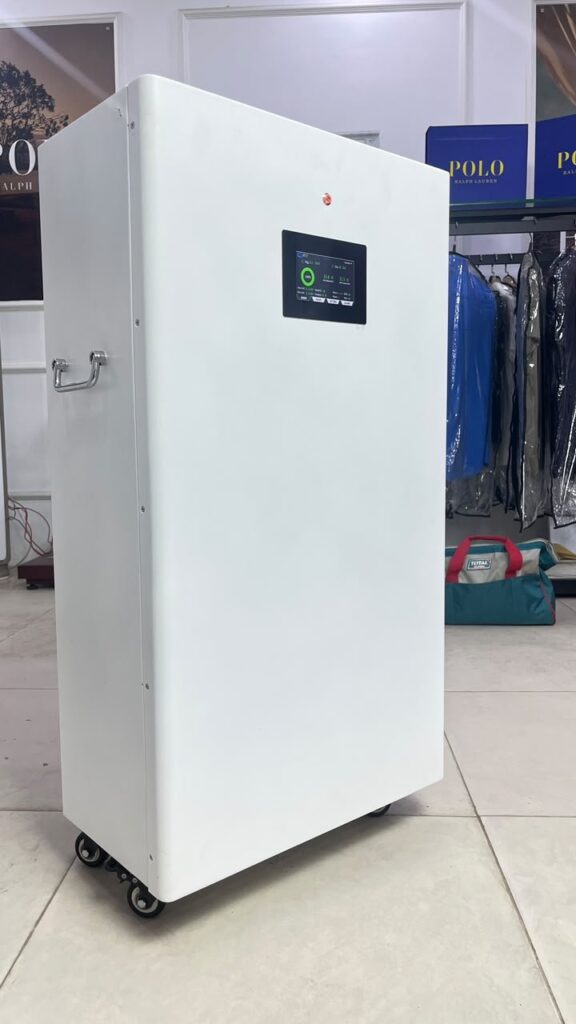
16KWh 51.2V 314Ah Lithium Battery
Heavy-duty capability optimized explicitly for rigorous loadshedding resistance.
Frequently Asked Questions (FAQ)
Q: I already have a 12V inverter. Should I upgrade my inverter or stick to 12V lithium?
A: If it is a basic 1kW UPS, simply build a 4S (12V) 100Ah lithium pack. If you want to run heavy loads, the 12V inverter must go. Upgrading to a 48V (51.2V) inverter is structurally necessary for solar homes.
Q: Are 4S, 8S, and 16S strictly the only configurations?
A: Some legacy telecom equipment runs on 15S (48V exactly), but 16S (51.2V) is the definitive global standard for modern consumer-grade Lithium Iron Phosphate setups.
Conclusion
Stop risking your home infrastructure by pushing thousands of watts through low-voltage 12V systems. Scaling up to 24V or 51.2V decreases amperage, radically shrinks copper wire requirements, maximizes inverter conversion efficiency up to 97%, and drastically reduces the chances of thermal events.
Ready to structure your array mathematically? Contact OffGridStore’s technical routing team at 03249094945 to ensure you select the perfect cell count and BMS layout for your home’s unique energy demands.